Delving into The psychology of pricing strategies, this introduction immerses readers in a unique and compelling narrative, with research style that is both engaging and thought-provoking from the very first sentence.
Understanding how pricing strategies influence consumer behavior and perception is crucial for businesses striving to maximize profits and create value for customers. By delving into the intricate relationship between psychology and pricing, we uncover the underlying factors that drive consumer decision-making.






Overview of Pricing Strategies
Pricing strategies play a crucial role in the world of marketing and consumer behavior. These strategies are carefully crafted to influence consumer perception and behavior, ultimately impacting purchasing decisions. Understanding the psychology behind pricing strategies is essential for businesses to effectively position their products or services in the market.
Defining Pricing Strategies
Pricing strategies refer to the methods and techniques used by businesses to set prices for their products or services. These strategies are not only based on cost considerations but also take into account market demand, competition, and most importantly, consumer behavior.
Importance of Pricing Strategies in Consumer Perception
The way a product is priced can significantly impact how consumers perceive its value and quality. For example, a higher price may lead consumers to believe that a product is of superior quality, while a lower price could be associated with lower quality. Pricing strategies help businesses to position their offerings in a way that resonates with their target audience and influences purchasing decisions.
Role of Psychology in Shaping Pricing Strategies, The psychology of pricing strategies
Psychology plays a key role in shaping pricing strategies as it delves into consumer behavior, decision-making processes, and perceptions. By understanding psychological principles such as price anchoring, loss aversion, and the power of numbers, businesses can design pricing strategies that appeal to the emotions and cognitive biases of consumers. This knowledge enables businesses to create pricing structures that maximize profitability and drive sales.
Types of Pricing Strategies: The Psychology Of Pricing Strategies
Premium Pricing:
Premium pricing involves setting a higher price to position the product as a luxury or high-end option in the market. This strategy is often used to create a perception of exclusivity and quality, appealing to a specific target market willing to pay more for perceived value.
Penetration Pricing:
Penetration pricing is a strategy where a product is initially offered at a lower price to gain market share quickly. The goal is to attract customers with a competitive price point and then potentially increase prices once a solid customer base is established.
Bundle Pricing:
Bundle pricing involves offering multiple products or services as a package deal at a discounted price compared to purchasing each item individually. This strategy aims to incentivize customers to buy more products by providing cost savings and perceived value in the bundle.
Psychological Pricing, Value-Based Pricing, and Cost-Plus Pricing
Psychological Pricing:
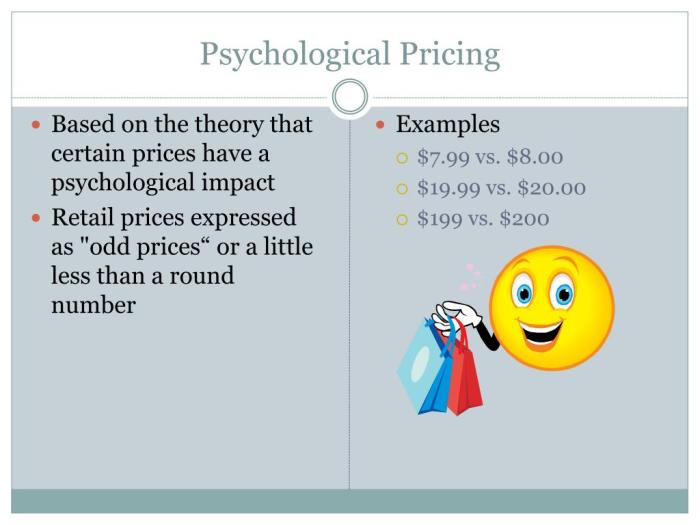
Psychological pricing is a strategy that considers how consumers perceive prices and make purchasing decisions based on factors like pricing endings, odd-even pricing, and price anchoring. For example, setting prices at $9.99 instead of $10 can create the perception of a lower price, even though the difference is minimal.
Value-Based Pricing:
Value-based pricing involves setting prices based on the perceived value of the product or service to the customer. This strategy focuses on the benefits and solutions provided to customers rather than solely considering production costs. Companies using value-based pricing aim to capture a share of the value they create for customers.
Cost-Plus Pricing:
Cost-plus pricing is a straightforward strategy where a company adds a markup to the cost of producing a product to determine the selling price. This markup includes both variable and fixed costs, ensuring that the company covers all expenses and generates a profit margin. However, cost-plus pricing does not consider market demand or perceived value.
Analyzing how psychological factors influence each type of pricing strategy:
Psychological factors play a significant role in shaping consumer behavior and influencing pricing strategies. For instance, premium pricing leverages consumers’ desire for prestige and status, while penetration pricing taps into the psychological effect of perceived value and savings. Bundle pricing capitalizes on the psychological principle of perceived value and the desire for a good deal.
In value-based pricing, understanding consumers’ perception of value is crucial in setting prices that align with their willingness to pay. On the other hand, cost-plus pricing may overlook the psychological aspect of pricing, focusing more on covering costs and ensuring profitability.
Overall, successful pricing strategies take into account psychological factors such as consumer perception, pricing psychology, and value proposition to effectively position products in the market and drive purchasing decisions.
Consumer Behavior and Pricing
Consumer behavior plays a crucial role in pricing strategies as it directly influences how consumers perceive prices and make purchasing decisions. Understanding consumer psychology can help businesses tailor their pricing strategies to maximize sales and profits.
Price perception is a key concept in consumer behavior that refers to how individuals interpret and evaluate prices. Consumers do not simply react to the numerical value of a price; instead, their perception is shaped by various factors such as reference prices, quality expectations, and the context in which the price is presented. For example, a product priced slightly higher than a competitor’s might be perceived as higher quality, leading consumers to choose it over the cheaper option.
Pricing strategies can influence consumer behavior by creating a sense of value. By strategically setting prices, businesses can signal quality, exclusivity, or affordability to consumers. For instance, a luxury brand that prices its products at a premium level may attract consumers seeking status or prestige. On the other hand, a discount retailer that offers low prices can appeal to price-sensitive consumers looking for deals.
Impact of Price Perception on Consumer Purchasing Behavior
Price perception can significantly impact consumer purchasing behavior by influencing their perceptions of value, quality, and affordability. Consumers are more likely to make a purchase when they perceive a price as fair and justified based on the perceived benefits of the product or service. Businesses can leverage price perception to create a competitive advantage and drive sales.
- Consumers tend to associate higher prices with higher quality, leading them to perceive premium-priced products as superior and desirable.
- Discount pricing strategies can attract price-sensitive consumers who prioritize affordability and value for money.
- Psychological pricing techniques, such as setting prices just below a whole number (e.g., $9.99 instead of $10), can create the perception of a better deal and encourage impulse purchases.
- Dynamic pricing, which adjusts prices based on demand and other factors, can capitalize on consumer behavior by optimizing prices for maximum profitability.
Pricing Tactics and Techniques
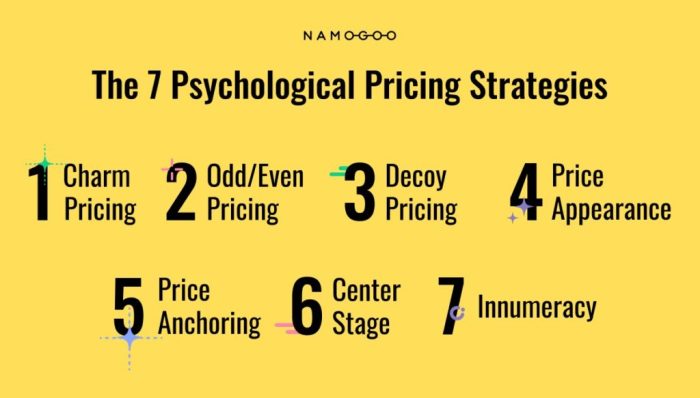
In the world of pricing strategies, businesses often employ various tactics and techniques to influence consumer behavior and maximize profits. Pricing tactics such as price anchoring, decoy pricing, and price bundling play a crucial role in shaping consumer perceptions and purchase decisions. Let’s delve into these common pricing techniques and explore the psychological principles behind them.
Price Anchoring
Price anchoring is a pricing tactic that involves setting a high initial price for a product or service to create a reference point for consumers. By anchoring the price high, subsequent prices may seem more reasonable, leading consumers to perceive them as good deals. For example, a software company may offer a premium package at $199/month to anchor the price, making the standard package at $99/month seem like a more affordable option. This tactic leverages the psychological principle of contrast effect, where people tend to judge the value of something based on a comparison with another option.
Decoy Pricing
Decoy pricing is a strategy where a third, less attractive option is introduced to make one of the other options look more appealing in comparison. This decoy option is priced in a way that makes the target option seem like the best value. For instance, a cinema may offer a small popcorn for $5, a medium popcorn for $7, and a large popcorn for $8. In this scenario, the medium popcorn acts as the decoy, pushing consumers towards purchasing the large popcorn, which now seems like a better deal. Decoy pricing takes advantage of the psychological bias of relativity, where consumers tend to make decisions based on relative comparisons rather than absolute value.
Price Bundling
Price bundling involves selling multiple products or services together as a package deal for a lower combined price than if purchased individually. This tactic aims to increase the perceived value of the bundle and encourage consumers to buy more than they originally intended. A classic example of price bundling is fast-food combo meals, where customers can get a burger, fries, and a drink for a discounted price compared to buying each item separately. Price bundling taps into the psychological principle of loss aversion, where consumers are more willing to make a purchase to avoid missing out on a perceived deal.
Ultimate Conclusion
In conclusion, The psychology of pricing strategies offers a deep dive into the intricate world of consumer behavior and pricing decisions. By leveraging psychological principles, businesses can craft effective strategies that resonate with their target audience, ultimately leading to increased sales and brand loyalty.
The impact of remote work on business operations has been profound in recent years. Companies have had to adapt quickly to the new work environment, utilizing technology to ensure productivity and communication. This shift has led to a reevaluation of traditional business practices and a focus on flexibility and efficiency.
To learn more about how remote work is reshaping business operations, visit Impact of remote work on business operations.
Artificial Intelligence (AI) is playing a crucial role in streamlining business processes. From automating repetitive tasks to providing valuable insights through data analysis, AI is revolutionizing how businesses operate. By incorporating AI into daily operations, companies can increase productivity and make more informed decisions.
To explore further the role of AI in optimizing business processes, check out The role of AI in streamlining business processes.
The e-commerce industry has seen significant changes post-pandemic, with new trends emerging to meet evolving consumer demands. Businesses are focusing on enhancing their online presence, improving customer experience, and implementing innovative marketing strategies to stay competitive. Understanding these trends is essential for companies looking to thrive in the digital marketplace.
For insights into the latest developments in the e-commerce industry, visit Trends in e-commerce industry post-pandemic.