As The role of emotional intelligence in leadership takes center stage, this opening passage beckons readers with research style into a world crafted with good knowledge, ensuring a reading experience that is both absorbing and distinctly original.
Emotional intelligence plays a crucial role in effective leadership, impacting decision-making, team dynamics, and conflict resolution. This article delves into the significance of emotional intelligence in shaping successful leaders.
Importance of Emotional Intelligence in Leadership
Emotional intelligence plays a crucial role in effective leadership by influencing how leaders manage themselves, understand others, and navigate complex interpersonal relationships in the workplace. Leaders with high emotional intelligence are better equipped to inspire and motivate their teams, make sound decisions, and handle conflicts with empathy and understanding.
Key Aspects of Emotional Intelligence for Leaders
- Self-awareness: Leaders who are self-aware can recognize their emotions, strengths, and weaknesses, allowing them to make more informed decisions and manage their behavior effectively.
- Empathy: Being able to understand and share the feelings of others enables leaders to connect with their team members on a deeper level, fostering trust and collaboration.
- Emotional regulation: Leaders who can control their emotions in challenging situations are less likely to react impulsively, maintaining composure and professionalism.
- Social skills: Effective leaders possess strong social skills, such as communication, conflict resolution, and teamwork, which are essential for building positive relationships and creating a supportive work environment.
Examples of Emotional Intelligence Impacting Leadership Decisions
When faced with a team conflict, a leader with high emotional intelligence may take the time to listen to each team member’s perspective, empathize with their emotions, and facilitate a constructive discussion to find a resolution that satisfies everyone involved.
In times of crisis, a leader who can stay calm under pressure, reassure their team, and make decisions with empathy and consideration for the well-being of their employees demonstrates the positive impact of emotional intelligence on leadership effectiveness.
Developing Emotional Intelligence in Leadership
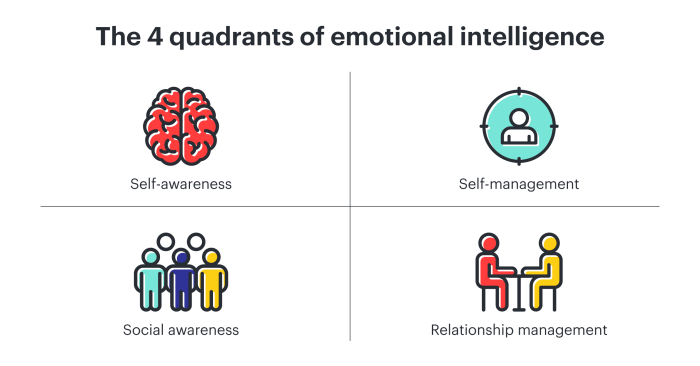
Emotional intelligence is a crucial factor in effective leadership, as it helps leaders understand and manage their own emotions and those of others. Developing emotional intelligence requires intentional effort and practice. Here are some strategies for leaders to enhance their emotional intelligence:
Importance of Self-Awareness
Self-awareness is the foundation of emotional intelligence. Leaders need to be aware of their own emotions, strengths, weaknesses, and values. This awareness allows them to recognize how their emotions impact their behavior and decision-making. Through self-reflection, feedback from others, and assessments like personality tests, leaders can improve their self-awareness.
Empathy in Developing Emotional Intelligence
Empathy is the ability to understand and share the feelings of others. It is a key component of emotional intelligence, as it enables leaders to connect with their team members on a deeper level. By actively listening, showing compassion, and considering different perspectives, leaders can enhance their empathy skills. This helps them build stronger relationships, foster trust, and create a positive work environment.
Real-Life Scenarios
One real-life example of a leader successfully improving their emotional intelligence is Satya Nadella, the CEO of Microsoft. Nadella recognized the importance of empathy in leadership and made it a core value at Microsoft. By practicing empathy, active listening, and fostering a culture of inclusivity, Nadella has transformed Microsoft’s organizational culture and performance.
Another example is Indra Nooyi, the former CEO of PepsiCo. Nooyi prioritized self-awareness and emotional intelligence in her leadership style. She encouraged open communication, embraced diversity, and showed vulnerability as a leader. These qualities helped her navigate complex challenges and inspire her team to achieve success.
By prioritizing self-awareness, empathy, and continuous learning, leaders can enhance their emotional intelligence and become more effective in their roles.
Emotional Intelligence vs. IQ in Leadership
Emotional intelligence and IQ are both important factors in leadership, but they play different roles in a leader’s effectiveness. While IQ represents cognitive ability and problem-solving skills, emotional intelligence refers to the ability to recognize, understand, and manage emotions in oneself and others. In the context of leadership, emotional intelligence can sometimes be more valuable than IQ, as it directly impacts how leaders interact with their team members, handle conflicts, and inspire others to achieve common goals.
Emotional Intelligence Outshining IQ in Leadership Roles
- Emotional intelligence allows leaders to empathize with their team members and build strong relationships based on trust and mutual respect. This emotional connection motivates employees to perform at their best and fosters a positive work environment.
- Leaders with high emotional intelligence are better equipped to manage conflicts and resolve disagreements among team members effectively. By staying calm under pressure and approaching conflicts with empathy and understanding, they can find solutions that benefit everyone involved.
- In times of crisis or uncertainty, leaders with high emotional intelligence can provide reassurance, support, and guidance to their team members. Their ability to remain composed and communicate effectively can help mitigate fear and anxiety, leading to a more cohesive and resilient team.
- When making decisions, leaders with high emotional intelligence consider not only the facts and data but also the impact on people’s emotions and well-being. They can anticipate how their decisions will affect their team members and adjust their approach accordingly to ensure a positive outcome.
Impact of Emotional Intelligence on Team Dynamics
Emotional intelligence plays a crucial role in shaping the dynamics within a team. A leader’s ability to understand and manage emotions not only impacts team morale but also influences productivity and overall success.
Building Stronger Relationships Within Teams, The role of emotional intelligence in leadership
Effective leaders with high emotional intelligence can build stronger relationships within their teams by:
- Showing empathy towards team members’ feelings and concerns.
- Communicating openly and transparently to foster trust.
- Resolving conflicts in a constructive and respectful manner.
- Recognizing and appreciating the contributions of each team member.
Transforming Team Dynamics in Organizations
Leaders who prioritize emotional intelligence have transformed team dynamics in organizations by:
- Creating a positive work environment where team members feel valued and supported.
- Fostering a culture of collaboration and teamwork by promoting open communication.
- Inspiring and motivating team members to achieve common goals.
- Adapting leadership styles to meet the emotional needs of different team members.
Emotional Intelligence in Conflict Resolution
Emotional intelligence plays a crucial role in handling conflicts within a team or organization. Leaders who possess high emotional intelligence are better equipped to navigate and resolve conflicts effectively, leading to improved team dynamics and overall organizational success.
Strategies for Leveraging Emotional Intelligence in Resolving Conflicts
- Practice active listening: Leaders with high emotional intelligence actively listen to all parties involved in the conflict, showing empathy and understanding.
- Manage emotions effectively: By regulating their own emotions and remaining calm in conflict situations, leaders can set a positive tone for resolution.
- Encourage open communication: Creating a safe space for open and honest communication allows conflicting parties to express their thoughts and feelings freely.
- Seek win-win solutions: Leaders can use their emotional intelligence to find solutions that address the needs and concerns of all parties involved, leading to mutually beneficial outcomes.
Examples of Successful Conflict Resolutions Driven by Emotional Intelligence
- A team leader who listened attentively to both sides of a conflict and helped them find common ground through empathetic communication, resulting in a collaborative solution.
- An executive who remained composed and empathetic during a heated disagreement between team members, guiding them towards a resolution that strengthened their working relationship.
- A manager who encouraged open dialogue and constructive feedback during a conflict, fostering a culture of trust and respect within the team, ultimately leading to a positive outcome.
Final Review: The Role Of Emotional Intelligence In Leadership
In conclusion, emotional intelligence is a powerful asset for leaders to navigate challenges, foster team cohesion, and drive organizational success. By prioritizing emotional intelligence development, leaders can unlock their full potential and inspire those around them to do the same.
Utilizing data analytics for strategic decision-making plays a crucial role in modern businesses. By analyzing data effectively, companies can gain valuable insights that help in making informed decisions. This article provides in-depth information on how data analytics can be utilized strategically: Utilizing data analytics for strategic decision-making.
Entrepreneurs often struggle with time management due to the numerous tasks they must juggle. Effective time management techniques are essential for success in business. This resource offers valuable tips and strategies to help entrepreneurs manage their time efficiently: Effective time management techniques for entrepreneurs.
Effective crisis management is crucial for businesses to survive challenging situations. This guide offers practical tips and strategies for businesses to effectively manage crises when they arise. Learn more about effective crisis management in businesses here: Tips for effective crisis management in businesses.
