Successful negotiation skills in business set the stage for achieving optimal outcomes in various scenarios, from closing deals to resolving conflicts. This article delves into the key elements, strategies, and tips to enhance your negotiation prowess.
Understanding Successful Negotiation Skills
Negotiation in a business context involves a discussion between two or more parties to reach a mutually beneficial agreement. It is a strategic communication process that is essential for businesses to achieve their objectives effectively.






Negotiation skills are crucial in business as they can help in securing better deals, resolving conflicts, and building strong relationships with partners, suppliers, and clients. By being skilled negotiators, businesses can maximize their profits, improve their market position, and gain a competitive edge in the industry.
Examples of Successful Negotiation Outcomes in Business Settings
- Successful negotiation of a partnership agreement that resulted in increased market share and revenue for both companies involved.
- Negotiating favorable terms with suppliers, leading to cost savings and improved profit margins for the business.
- Resolving a contract dispute through negotiation, avoiding costly legal battles and maintaining a positive business relationship.
- Negotiating a merger or acquisition deal that created synergies and growth opportunities for the combined entities.
Key Elements of Successful Negotiation
Effective negotiation skills are crucial in the business world, and there are key elements that contribute to a successful negotiation process. These elements include effective communication, active listening, and empathy.
Effective Communication
Effective communication is a fundamental element of successful negotiation. It involves clearly conveying your thoughts, ideas, and needs to the other party while also listening to their perspective. By being able to articulate your points clearly and understand the other party’s position, you can work towards finding a mutually beneficial agreement. Effective communication also includes non-verbal cues such as body language, tone of voice, and facial expressions, which can impact the negotiation outcome significantly.
- Clearly state your objectives and expectations.
- Listen actively to the other party’s concerns and needs.
- Ask clarifying questions to ensure mutual understanding.
- Adapt your communication style to the preferences of the other party.
Active Listening
Active listening is another essential element of successful negotiation. It involves fully concentrating on what the other party is saying, understanding their perspective, and responding appropriately. By actively listening, you can demonstrate respect for the other party, build rapport, and uncover underlying interests or concerns that can lead to creative solutions.
- Give full attention to the speaker without interrupting.
- Repeat back key points to confirm understanding.
- Show empathy and acknowledge the other party’s emotions.
- Avoid making assumptions and seek clarification when needed.
Empathy
Empathy plays a vital role in successful negotiation by allowing you to understand and connect with the emotions and perspectives of the other party. By demonstrating empathy, you can build trust, foster a positive relationship, and find common ground for reaching a mutually acceptable agreement.
- Put yourself in the other party’s shoes to see things from their point of view.
- Acknowledge the emotions and concerns of the other party.
- Show genuine interest in finding a solution that meets both parties’ needs.
- Refrain from judgment and approach the negotiation with an open mind.
Strategies for Successful Negotiation

Successful negotiation in business requires the implementation of effective strategies to achieve favorable outcomes. Different negotiation strategies are commonly used in the business world to navigate through deals and agreements. It is essential to understand the various approaches and choose the most suitable one based on the specific situation and goals.
Competitive vs. Collaborative Negotiation Approaches, Successful negotiation skills in business
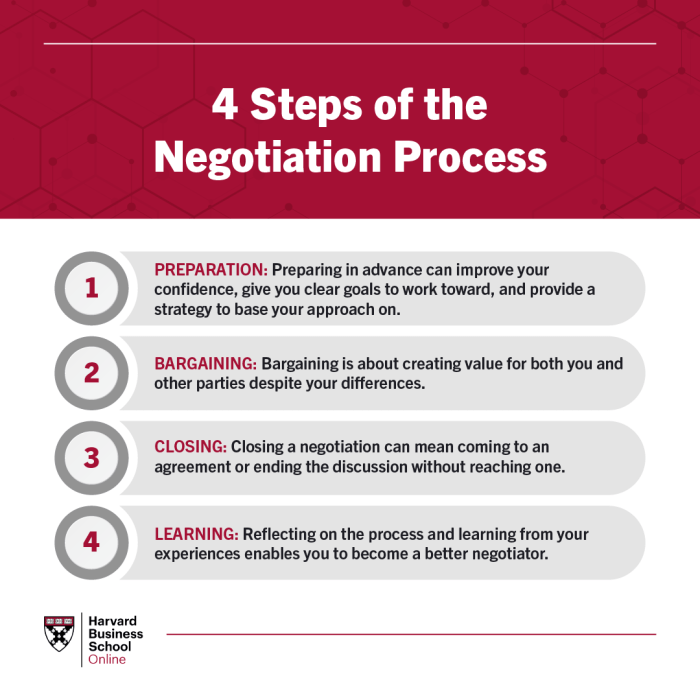
Competitive negotiation, often referred to as distributive or win-lose negotiation, focuses on maximizing individual gains at the expense of the other party. This approach typically involves setting a fixed pie where one party’s gain is the other party’s loss. On the other hand, collaborative negotiation, also known as integrative or win-win negotiation, aims to create value for both parties by exploring mutually beneficial solutions.
- Competitive Negotiation:
- Emphasizes on claiming value and maximizing individual gains.
- May involve tactics such as aggressive bargaining and withholding information.
- Fosters a more adversarial relationship between the parties.
- Collaborative Negotiation:
- Focuses on creating value and finding mutually beneficial solutions.
- Encourages open communication, trust, and transparency.
- Builds a foundation for a more positive and long-term relationship.
Leveraging Power Dynamics during Negotiations
Power dynamics play a crucial role in negotiations and can significantly impact the outcome. Understanding how to leverage power effectively can give a negotiator an advantage in achieving their objectives.
- Knowledge is Power:
- Having a thorough understanding of the subject matter and being well-prepared can enhance your credibility and bargaining position.
- Building Relationships:
- Establishing rapport and trust with the other party can create a more collaborative environment and increase the likelihood of reaching a mutually beneficial agreement.
- Using Alternatives:
- Having attractive alternatives or a BATNA (Best Alternative to a Negotiated Agreement) can strengthen your position and give you more leverage during negotiations.
- Timing and Patience:
- Knowing when to make concessions or push for a better deal requires strategic timing and patience to navigate through the negotiation process effectively.
Developing and Improving Negotiation Skills

Effective negotiation skills are essential in the business world, as they can lead to successful deals, partnerships, and collaborations. Here are some tips for developing strong negotiation skills:
The Importance of Preparation and Research
Before entering any negotiation, it is crucial to thoroughly prepare and conduct research. This includes understanding the other party’s needs, goals, and potential objections, as well as knowing your own bottom line and desired outcomes.
- Research the market trends, industry standards, and competitive landscape to have a better understanding of the context in which the negotiation will take place.
- Prepare a negotiation strategy that includes both your primary and alternative plans, as well as potential concessions and trade-offs.
Practice and Experience in Negotiation
Practice plays a significant role in improving negotiation skills. The more negotiations you engage in, the more experience you gain, allowing you to fine-tune your approach and strategies over time.
- Participate in mock negotiations, workshops, or training sessions to simulate real-life negotiation scenarios and receive feedback on your performance.
- Reflect on past negotiations to identify areas for improvement and learn from both successful and unsuccessful outcomes.
Final Summary: Successful Negotiation Skills In Business

In conclusion, mastering successful negotiation skills is a vital asset for navigating the complexities of business interactions. By honing your communication, empathy, and strategic approaches, you can elevate your negotiation game to new heights of success.