
Top financial management tips for entrepreneurs takes center stage, inviting readers into a world of knowledge and expertise. This comprehensive guide offers valuable insights to help entrepreneurs navigate the complexities of financial management with confidence and efficiency.
Exploring key aspects such as budgeting strategies, cash flow management, investment decisions, tax planning, and financial reporting, this article equips entrepreneurs with the tools needed to make informed financial decisions and drive business growth.






Importance of Financial Management

Financial management is crucial for entrepreneurs as it involves planning, organizing, directing, and controlling the financial activities of a business. It helps in ensuring the efficient use of resources, maximizing profits, and achieving long-term sustainability. Without proper financial management, businesses may struggle to survive and grow in a competitive market.
Impact of Poor Financial Management
Poor financial management can have detrimental effects on a business, such as:
- Cash flow issues leading to inability to pay bills or meet financial obligations.
- Excessive debt accumulation resulting in financial distress and potential bankruptcy.
- Lack of funds for investments in growth opportunities, hindering business expansion.
- Inaccurate financial reporting leading to incorrect decision-making and financial instability.
Benefits of Effective Financial Management Practices
Effective financial management practices offer numerous benefits to entrepreneurs, including:
- Improved cash flow management, ensuring enough liquidity for day-to-day operations.
- Better decision-making based on accurate financial data and projections.
- Reduced financial risks by identifying and addressing potential issues early on.
- Enhanced profitability through cost control measures and revenue optimization strategies.
Budgeting Strategies

Budgeting is a crucial aspect of financial management for entrepreneurs as it helps in planning and controlling expenses to ensure the business operates efficiently. Here, we will discuss different budgeting techniques suitable for entrepreneurs, how to create a realistic budget for business operations, and the importance of tracking and analyzing budget variances.
Different Budgeting Techniques
- Zero-Based Budgeting: This technique requires every expense to be justified from scratch, ensuring that all costs are necessary for the business.
- Incremental Budgeting: Based on the previous period’s budget, incremental budgeting involves making adjustments for the upcoming period.
- Activity-Based Budgeting: This technique assigns costs based on the activities that drive those costs, providing a more accurate reflection of expenses.
Creating a Realistic Budget
- Estimate Revenue and Expenses: Forecast the expected revenue and expenses by analyzing historical data, market trends, and future projections.
- Include Contingency: Plan for unexpected expenses by setting aside a portion of the budget for contingencies to avoid cash flow issues.
- Review Regularly: Update the budget periodically to reflect any changes in the business environment or financial performance.
Importance of Tracking and Analyzing Budget Variances
- Identify Variances: Tracking budget variances helps in identifying areas where actual expenses differ from the budgeted amounts.
- Take Corrective Actions: Analyzing variances allows entrepreneurs to take corrective actions to address overspending or underperformance in certain areas.
- Improve Decision-Making: By understanding the reasons behind budget variances, entrepreneurs can make informed decisions to improve financial management and overall business performance.
Cash Flow Management
Effective cash flow management is crucial for the sustainability and growth of a business. It involves monitoring, analyzing, and optimizing the flow of cash in and out of the company to ensure that there is enough liquidity to meet financial obligations and seize opportunities for growth.
Improving Cash Flow Through Effective Invoicing and Payment Strategies
One key way to improve cash flow is by optimizing your invoicing and payment processes. This includes sending out invoices promptly, clearly outlining payment terms, and following up on overdue payments. Offering discounts for early payments can also incentivize clients to pay quicker, improving your cash flow.
- Send out invoices promptly after delivering goods or services to ensure timely payment.
- Clearly Artikel payment terms on invoices, including due dates and accepted payment methods.
- Follow up on overdue payments with polite reminders and phone calls to encourage prompt payment.
- Consider offering discounts for early payments to incentivize clients to settle invoices sooner.
Handling Cash Flow Challenges and Maintaining Liquidity
Despite best efforts, businesses may still face cash flow challenges due to various factors such as seasonality, unexpected expenses, or economic downturns. It is essential to have strategies in place to navigate these challenges and maintain liquidity.
- Build a cash reserve to cushion against unexpected expenses or fluctuations in income.
- Negotiate extended payment terms with suppliers to improve cash flow and flexibility in managing expenses.
- Explore financing options such as business lines of credit or short-term loans to bridge cash flow gaps during challenging periods.
- Regularly review and update cash flow forecasts to anticipate potential challenges and make informed financial decisions.
Investment and Financing
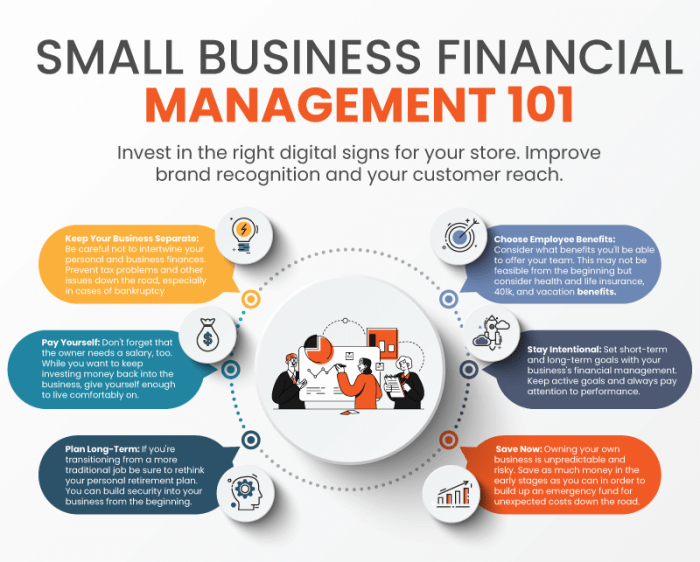
When it comes to running a successful business, making smart investment decisions and securing appropriate financing are crucial steps for entrepreneurs. By understanding the various options available and evaluating risks and returns, entrepreneurs can ensure the financial stability and growth of their business.
Smart Investment Decisions
- Invest in your business: Prioritize investments that directly contribute to the growth and success of your business, such as upgrading technology, expanding product lines, or improving marketing strategies.
- Diversify investments: Spread out your investments across different asset classes to reduce risk and maximize returns. Consider options like stocks, bonds, real estate, and mutual funds.
- Seek professional advice: Consult with financial advisors or investment experts to get guidance on making informed investment decisions tailored to your business goals and risk tolerance.
Sources of Financing for Small Businesses
- Bootstrapping: Utilize personal savings, credit cards, or income generated from the business to fund operations and growth.
- Bank loans: Apply for traditional loans from banks or financial institutions to secure capital for business expansion or major investments.
- Angel investors and venture capital: Seek funding from angel investors or venture capital firms who provide capital in exchange for equity in the company.
- Crowdfunding: Utilize online platforms to raise funds from a large number of individuals who believe in your business idea or products.
Evaluating Risks and Returns
- Assess risk tolerance: Understand your comfort level with risk and align investment decisions accordingly to balance risk and potential returns.
- Consider time horizon: Evaluate the time frame for your investments and choose strategies that match your short-term or long-term financial goals.
- Monitor performance: Regularly review the performance of your investments, adjust strategies as needed, and stay informed about market trends and economic conditions.
Tax Planning
Tax planning is a crucial aspect of financial management for entrepreneurs as it involves strategically organizing their financial affairs to minimize tax liabilities and take advantage of available tax benefits. Effective tax planning can help businesses optimize their cash flow, improve profitability, and ensure compliance with tax regulations.
Importance of Tax Planning
- Reduce Tax Liabilities: By identifying tax-saving opportunities and implementing tax-efficient strategies, entrepreneurs can minimize the amount of taxes they owe to the government.
- Maximize Tax Benefits: Proper tax planning allows businesses to take advantage of available tax credits, deductions, and incentives to reduce their overall tax burden.
- Improve Cash Flow: By managing tax payments strategically, entrepreneurs can ensure that they have sufficient cash flow to meet their financial obligations and invest in growth opportunities.
Strategies to Minimize Tax Liabilities
- Utilize Tax Credits and Deductions: Take advantage of tax credits and deductions for expenses related to business operations, investments, and employee benefits.
- Invest in Tax-Efficient Savings Vehicles: Consider investing in tax-advantaged retirement accounts, such as 401(k) plans or IRAs, to reduce taxable income.
- Timing of Income and Expenses: Strategically time the recognition of income and expenses to optimize tax liabilities in a given tax year.
Implications of Tax Regulations on Business Finances
- Compliance Costs: Ensuring compliance with complex tax regulations can incur additional costs for businesses in terms of time, resources, and professional services.
- Penalties and Interest: Non-compliance with tax regulations can result in penalties, fines, and interest charges, which can negatively impact a business’s financial health.
- Legal Risks: Failing to adhere to tax laws and regulations can expose entrepreneurs to legal risks, audits, and potential litigation that can harm their business reputation and financial stability.
Financial Reporting and Analysis

Financial reporting plays a crucial role in helping entrepreneurs make informed decisions about their business. By providing a snapshot of the financial health of the company, financial reports enable entrepreneurs to analyze performance, identify trends, and plan for the future.
Significance of Financial Reporting
Financial reporting provides valuable insights into the financial position of a business, allowing entrepreneurs to track progress towards goals, assess profitability, and make strategic decisions. By analyzing financial reports, entrepreneurs can identify areas of improvement, allocate resources effectively, and ensure the long-term sustainability of their business.
- Income Statement: Also known as the profit and loss statement, this report shows the revenue, expenses, and net income of the business over a specific period. It helps entrepreneurs evaluate the profitability of the company and make adjustments to improve financial performance.
- Balance Sheet: This report provides a snapshot of the company’s assets, liabilities, and equity at a specific point in time. It helps entrepreneurs understand the financial position of the business and assess its ability to meet financial obligations.
- Cash Flow Statement: This report shows the inflows and outflows of cash in the business, highlighting the sources and uses of cash. It helps entrepreneurs manage liquidity, plan for future cash needs, and make informed investment decisions.
Key Financial Metrics
Monitoring key financial metrics is essential for entrepreneurs to track performance, identify trends, and make data-driven decisions to drive business growth.
- Profit Margin: Calculated by dividing net income by revenue, the profit margin indicates the percentage of revenue that translates into profit. A higher profit margin reflects better efficiency and profitability.
- Return on Investment (ROI): ROI measures the return generated on an investment relative to the cost of the investment. It helps entrepreneurs assess the effectiveness of investments and allocate resources wisely.
- Debt-to-Equity Ratio: This ratio compares the company’s debt to its equity, indicating the level of financial leverage. A lower debt-to-equity ratio signifies less reliance on debt financing and lower financial risk.
Interpreting Financial Statements, Top financial management tips for entrepreneurs
Interpreting financial statements involves analyzing the data presented to evaluate the financial performance and health of the business. Entrepreneurs can use financial statements to assess profitability, liquidity, solvency, and efficiency.
- Comparative Analysis: Comparing financial data over different periods helps identify trends and assess performance changes. Entrepreneurs can track growth, profitability, and financial stability over time.
- Ratio Analysis: Calculating financial ratios based on data from the financial statements provides insights into the company’s financial health. Ratios like the current ratio, quick ratio, and return on assets help entrepreneurs evaluate liquidity, efficiency, and profitability.
- Trend Analysis: Examining how key financial metrics evolve over time helps entrepreneurs understand the impact of business decisions and external factors on financial performance. Trend analysis enables entrepreneurs to make proactive adjustments and strategic decisions.
Wrap-Up: Top Financial Management Tips For Entrepreneurs
In conclusion, mastering financial management is essential for entrepreneurial success. By implementing the tips and strategies Artikeld in this guide, entrepreneurs can effectively manage their finances, mitigate risks, and optimize business performance for long-term sustainability.