
Best practices for online reputation management takes center stage in today’s digital landscape, guiding businesses towards a path of success and credibility. This comprehensive guide delves into the importance of managing online reputation effectively and offers valuable insights on building trust, handling crises, and more.
Importance of Online Reputation Management: Best Practices For Online Reputation Management

Maintaining a positive online reputation is crucial for businesses in today’s digital age where consumers heavily rely on the internet for information. A strong online reputation can significantly impact a company’s success, while a negative one can lead to damaging consequences.






A good online reputation can positively impact a company in several ways:
Enhanced Credibility and Trust
- Consumers are more likely to trust and choose a company with a positive online reputation.
- A positive reputation can attract new customers and retain existing ones.
Increased Sales and Revenue
- Companies with a good online reputation are more likely to see an increase in sales and revenue.
- Positive reviews and testimonials can influence purchasing decisions in favor of the company.
Better Talent Acquisition
- Job seekers often look at a company’s online reputation before applying for a position.
- A positive reputation can attract top talent and help in recruitment efforts.
On the other hand, a negative online reputation can harm a business in various ways:
Loss of Customers
- Negative reviews and feedback can deter potential customers from choosing the company.
- Customers may switch to competitors with better online reputations.
Damaged Brand Image
- A negative online reputation can tarnish a company’s brand image and credibility.
- It may take time and effort to rebuild trust and repair the damage caused by negative publicity.
Decreased Revenue
- A decline in sales and revenue can be directly linked to a negative online reputation.
- Customers may hesitate to do business with a company that has a poor online reputation.
Strategies for Effective Online Reputation Management
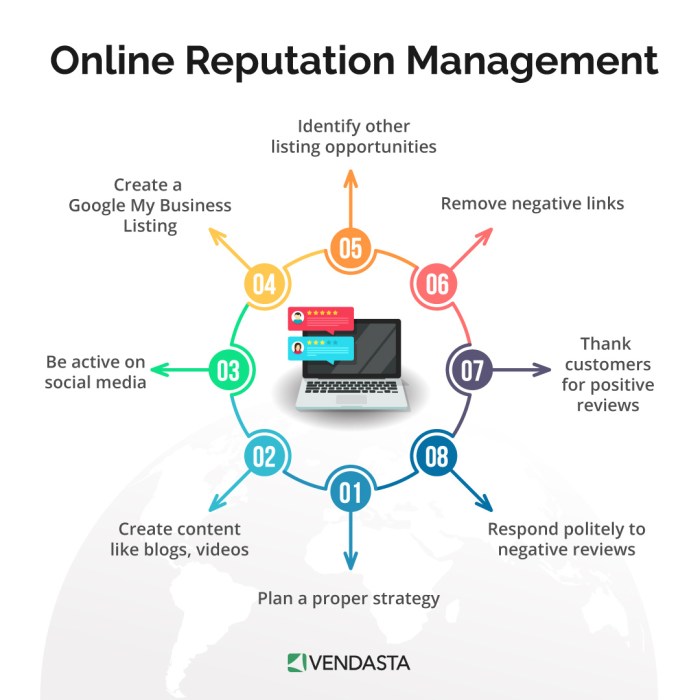
In today’s digital age, managing your online reputation is crucial for building trust with customers and maintaining a positive brand image. Here are some proactive steps that can be taken to effectively manage online reputation:
Monitor Online Mentions
Keeping track of what is being said about your brand online is essential for managing your reputation. Utilize tools like Google Alerts, Mention, or Brandwatch to monitor mentions of your brand across social media, review sites, and other online platforms.
Engage with Your Audience
Engaging with your audience on social media and review sites can help build positive relationships and show that you value customer feedback. Respond to comments, messages, and reviews in a timely and professional manner to demonstrate your commitment to customer satisfaction.
Encourage Positive Reviews
Encourage satisfied customers to leave positive reviews on review sites or social media platforms. This can help counteract any negative feedback and showcase the positive experiences that customers have had with your brand.
Address Negative Feedback
When faced with negative feedback or reviews, it is important to respond promptly and constructively. Apologize for any shortcomings, offer a solution or compensation if appropriate, and demonstrate a willingness to address the issue and improve in the future.
Monitor Competitor Activity
Keep an eye on your competitors’ online reputation as well, as their actions can impact how your brand is perceived. Stay informed about any negative campaigns or reviews targeting your brand and be prepared to respond appropriately.
Seek Professional Help
If managing your online reputation becomes overwhelming or if you encounter a crisis situation, consider seeking the help of a professional reputation management company. They can provide guidance, support, and expertise in navigating complex online reputation issues.
By implementing these strategies and actively managing your online reputation, you can build trust with customers, maintain a positive brand image, and mitigate the impact of any negative feedback or reviews.
Building Trust and Credibility Online

Building trust and credibility online is crucial for maintaining a positive online reputation. Customers are more likely to engage with businesses they trust, and credibility plays a significant role in establishing that trust. Here are some ways to build trust with customers through online interactions and the importance of authenticity in maintaining credibility.
Establish Clear Communication Channels
- Provide multiple channels for customers to reach out, such as email, social media, and live chat.
- Ensure timely responses to customer inquiries and address any concerns promptly.
- Be transparent about your products or services and provide accurate information to build trust with customers.
Deliver Consistent Quality
- Consistency in delivering high-quality products or services helps build credibility with customers.
- Encourage customer feedback and reviews to showcase the quality of your offerings.
- Consistent positive experiences lead to repeat business and positive word-of-mouth recommendations.
Engage with Customers Authentically
- Personalize interactions with customers to show genuine interest in their needs and preferences.
- Respond to feedback, whether positive or negative, in a professional and empathetic manner.
- Showcase the human side of your brand by sharing behind-the-scenes content or customer success stories.
Handling Crisis Situations
In the digital age, handling crisis situations online is crucial for maintaining a positive reputation and brand image. When faced with a crisis, transparency and effective communication are key to navigating the situation successfully.
Framework for Handling Reputation Crises
- Assess the Situation: Quickly gather all relevant information to understand the scope and impact of the crisis.
- Develop a Response Plan: Create a detailed plan outlining how you will address the crisis, including key messages and communication channels.
- Be Transparent: Acknowledge the issue openly and honestly, taking responsibility where necessary.
- Monitor and Respond: Continuously monitor the situation online and respond promptly to any inquiries or concerns.
- Evaluate and Learn: After the crisis is resolved, evaluate the response and learn from the experience to improve crisis management strategies in the future.
Importance of Transparency and Communication, Best practices for online reputation management
Effective communication and transparency during a crisis can help build trust with stakeholders and demonstrate accountability. By openly addressing the issue and providing updates on the situation, companies can show that they are taking the necessary steps to resolve the crisis and prevent similar incidents in the future.
Examples of Companies Managing Crisis Situations
United Airlines
During a PR crisis involving a passenger incident, United Airlines responded quickly, issued a public apology, and implemented policy changes to prevent similar incidents.
Johnson & Johnson
When faced with the Tylenol poisoning crisis, Johnson & Johnson acted swiftly, recalling products, working with authorities, and prioritizing customer safety, leading to a successful recovery of their reputation.
Nestle
After a social media backlash over sourcing practices, Nestle engaged with critics, improved transparency, and implemented sustainable sourcing policies, showcasing their commitment to addressing concerns and rebuilding trust.
Closure
In conclusion, mastering the best practices for online reputation management is key to thriving in the competitive online sphere. By implementing proactive strategies, fostering trust and credibility, and navigating crisis situations with transparency, businesses can safeguard their reputation and secure long-term success.
Customer feedback plays a crucial role in the continuous improvement of businesses. By actively seeking and analyzing customer opinions and suggestions, companies can identify areas for enhancement and innovation. Implementing changes based on feedback can lead to increased customer satisfaction and loyalty, ultimately driving business growth.
For more information on the importance of customer feedback for business improvement, please visit Importance of customer feedback for business improvement.
Sustainable practices are becoming increasingly important in today’s business landscape. By incorporating eco-friendly initiatives into operations, companies can reduce their environmental impact and appeal to environmentally conscious consumers. Implementing sustainable practices not only benefits the planet but can also result in cost savings and improved brand reputation.
To learn more about implementing sustainable practices in business operations, visit Implementing sustainable practices in business operations.
Before launching a new business, entrepreneurs must be aware of the legal requirements and regulations that govern their industry. Understanding these legal obligations is crucial for ensuring compliance and avoiding potential fines or penalties. From business registration to licensing and permits, adhering to legal requirements is essential for a successful and sustainable venture.
To explore more about legal requirements for starting a new business, please refer to Legal requirements for starting a new business.
