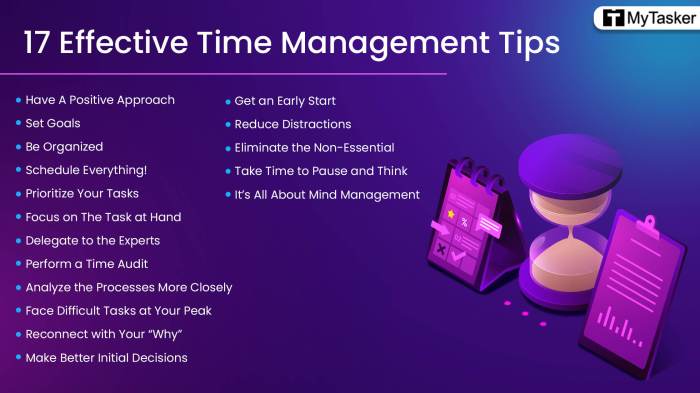
Effective time management techniques for entrepreneurs: Maximizing productivity and success. Delve into the world of efficient time management strategies tailored for entrepreneurs, ensuring a seamless blend of innovation and organization.
Explore the intricacies of prioritizing tasks, utilizing time management tools, setting goals and deadlines, and mastering the art of delegation for optimal efficiency.






Importance of Time Management for Entrepreneurs
Effective time management is crucial for entrepreneurs as it allows them to make the most of their limited resources, such as time, energy, and money. By utilizing their time efficiently, entrepreneurs can increase their productivity, focus on high-priority tasks, and ultimately achieve their business goals.
Poor time management can have detrimental effects on an entrepreneur’s productivity and success. For example, if an entrepreneur fails to prioritize tasks effectively, they may end up spending too much time on trivial matters while neglecting critical aspects of their business. This can lead to missed deadlines, decreased quality of work, and ultimately, a negative impact on the overall success of the venture.
To ensure optimal time management, entrepreneurs can implement various strategies such as creating a daily schedule, setting deadlines for tasks, delegating responsibilities, and utilizing tools like time tracking apps. By prioritizing tasks based on importance and urgency, entrepreneurs can maximize their efficiency and make significant progress towards their business objectives.
Prioritizing Tasks
- Identify high-priority tasks that align with business goals
- Delegate or outsource tasks that are time-consuming but not essential
- Set specific deadlines for each task to maintain focus and accountability
Effective Time Management Techniques
- Use time tracking tools to monitor and analyze how time is spent
- Avoid multitasking and focus on one task at a time
- Schedule regular breaks to maintain productivity and minimize burnout
Time Management Tools for Entrepreneurs

Effective time management is crucial for entrepreneurs to maximize productivity and achieve their business goals. Fortunately, there are numerous tools and apps available to help entrepreneurs manage their time efficiently. These tools not only assist in organizing tasks but also help in prioritizing activities to ensure optimal use of time.
Popular Time Management Tools and Apps
- Todoist: Todoist is a popular task management app that allows entrepreneurs to create to-do lists, set deadlines, and prioritize tasks. It also offers features like recurring tasks and project templates to streamline workflow.
- Toggl: Toggl is a time tracking tool that enables entrepreneurs to track how they spend their time on various tasks. This helps in identifying time-wasting activities and optimizing work processes for increased efficiency.
- Google Calendar: Google Calendar is a widely used calendar app that helps entrepreneurs schedule meetings, set reminders, and share calendars with team members. It also integrates with other Google apps for seamless task management.
- RescueTime: RescueTime is a time management tool that runs in the background to track time spent on different websites and applications. It provides detailed reports on productivity levels and helps entrepreneurs make informed decisions on time allocation.
Benefits of Different Time Tracking Methods
- Manual Time Tracking: Manual time tracking methods like using spreadsheets or journals offer a hands-on approach to tracking time. This method allows entrepreneurs to have a detailed understanding of how they spend their time and identify areas for improvement.
- Automated Time Tracking: Automated time tracking tools like Toggl or RescueTime offer convenience and accuracy in tracking time. These tools eliminate the need for manual input and provide real-time data on time usage for better decision-making.
- Integrated Time Tracking: Integrated time tracking tools that sync with project management or task management apps offer a holistic view of time spent on specific projects or tasks. This integration helps entrepreneurs allocate resources effectively and monitor progress efficiently.
Utilizing Technology for Time Management, Effective time management techniques for entrepreneurs
Technology plays a crucial role in aiding entrepreneurs to organize their schedules and tasks effectively. By leveraging tools like project management software, communication apps, and cloud storage solutions, entrepreneurs can streamline workflow, collaborate with team members, and stay on top of deadlines. Additionally, automation tools can help in delegating repetitive tasks and freeing up time for strategic decision-making and business growth.
Strategies for Setting Goals and Deadlines

Setting clear goals and deadlines is crucial for effective time management for entrepreneurs. It helps in providing direction, focus, and motivation to work towards achieving desired outcomes within a specific timeframe.
Breaking Down Big Goals into Smaller Tasks
Breaking down big goals into smaller, actionable tasks is a key strategy for effective time management. By dividing a large goal into smaller, manageable tasks, entrepreneurs can create a roadmap for progress and ensure steady advancement towards the ultimate objective. This approach also helps in maintaining momentum and avoiding overwhelm.
- Identify the main goal: Start by clearly defining the overarching goal that you want to achieve.
- Break it down: Divide the main goal into smaller, achievable tasks or milestones.
- Set deadlines: Assign deadlines to each task to create a sense of urgency and accountability.
- Prioritize tasks: Determine the order in which tasks need to be completed based on importance and dependencies.
- Track progress: Monitor and track your progress regularly to stay on course and make necessary adjustments.
By breaking down big goals into smaller tasks, entrepreneurs can make progress more manageable and maintain a sense of accomplishment along the way.
Setting SMART Goals
Setting SMART goals – Specific, Measurable, Achievable, Relevant, and Time-bound – is a proven method to help entrepreneurs stay focused and motivated in their pursuit of success.
- Specific: Clearly define what you want to achieve with specific details.
- Measurable: Establish concrete criteria for measuring progress and success.
- Achievable: Set goals that are challenging yet attainable with effort and commitment.
- Relevant: Ensure that the goals align with your overall business objectives and vision.
- Time-bound: Assign a deadline to each goal to create a sense of urgency and commitment.
SMART goals provide a framework for effective goal-setting, helping entrepreneurs prioritize tasks, stay on track, and achieve meaningful results.
Delegation and Outsourcing for Efficient Time Management
Delegating tasks and outsourcing work can significantly benefit entrepreneurs in managing their time more efficiently. By entrusting certain responsibilities to others, entrepreneurs can focus on high-priority tasks, enhance productivity, and achieve better work-life balance.
Benefits of Delegating Tasks and Outsourcing Work
Delegating tasks and outsourcing work offer several advantages for entrepreneurs:
- Allows entrepreneurs to focus on core business activities that require their expertise.
- Increases efficiency by leveraging the skills and resources of others.
- Enables entrepreneurs to take on more projects and expand their business without being overwhelmed.
- Reduces stress and prevents burnout by sharing the workload.
Tips for Identifying Tasks that Can be Delegated or Outsourced
Entrepreneurs can identify tasks that are suitable for delegation or outsourcing by:
- Evaluating the importance and urgency of each task.
- Assessing their own strengths and weaknesses to determine which tasks align with their expertise.
- Considering the cost-effectiveness of delegating or outsourcing compared to handling the task themselves.
- Identifying repetitive or time-consuming tasks that can be automated or delegated to others.
Challenges of Delegating Tasks and How to Overcome Them
Entrepreneurs may face challenges when delegating tasks, such as:
- Difficulty in letting go of control and trusting others to complete tasks.
- Communication issues that may lead to misunderstandings or errors in task execution.
- Fear of losing quality or not meeting expectations when tasks are delegated.
To overcome these challenges, entrepreneurs can:
- Clearly define tasks, expectations, and deadlines when delegating.
- Provide adequate training and resources to ensure the success of the delegated tasks.
- Establish regular check-ins and feedback mechanisms to monitor progress and address any issues promptly.
Closing Notes: Effective Time Management Techniques For Entrepreneurs
In conclusion, mastering effective time management techniques is the cornerstone of success for entrepreneurs. By implementing these strategies, entrepreneurs can streamline their workflow, increase productivity, and achieve their goals with precision.
Recent research has shown that the e-commerce industry is experiencing significant growth post-pandemic. Businesses are adapting to new trends and technologies to meet the changing demands of consumers. To stay competitive, it is crucial for e-commerce companies to stay updated on the latest Trends in e-commerce industry post-pandemic and adjust their strategies accordingly.
When starting a new business, it is important to be aware of the legal requirements that must be met. Understanding the legal framework and regulations can help entrepreneurs avoid potential pitfalls and ensure compliance. To learn more about the essential legal requirements for starting a new business, check out this informative guide on Legal requirements for starting a new business.
Customer retention is crucial for the long-term success of any business. By implementing effective strategies and personalized approaches, businesses can increase their customer retention rate significantly. Learn more about How to increase customer retention rate and enhance customer loyalty for sustainable growth.