
Delving into Effective ways to overcome business challenges, this introduction immerses readers in a unique and compelling narrative, with research style that is both engaging and thought-provoking from the very first sentence.
Identifying the common challenges faced by businesses across industries, developing strategic plans, leveraging technology, and building strong teams are crucial aspects that pave the way for success in the corporate world.






Identifying Business Challenges: Effective Ways To Overcome Business Challenges
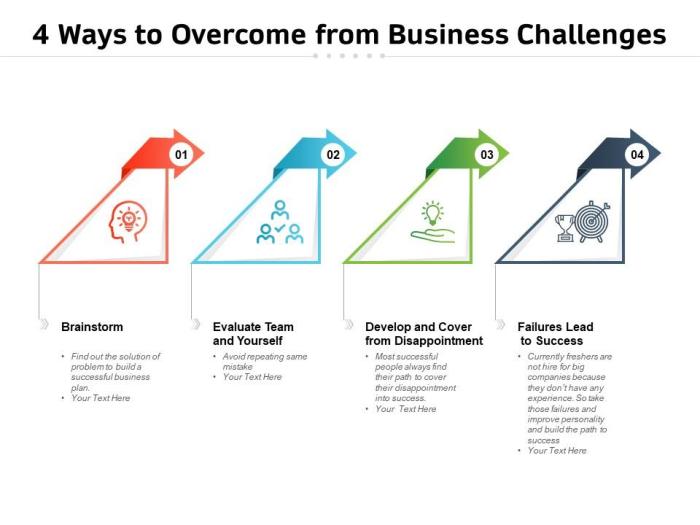
Identifying business challenges is crucial for any organization to effectively address and overcome obstacles that may hinder growth and success. By recognizing these challenges, businesses can strategize and implement solutions to mitigate their impact.
Common Business Challenges
- Competition: In today’s global marketplace, businesses face intense competition from both established companies and emerging startups. Staying ahead of competitors and differentiating products or services is a constant challenge.
- Financial Constraints: Limited budgets, cash flow issues, and access to capital are common financial challenges that many businesses encounter. Managing finances effectively is essential for long-term sustainability.
- Technological Advancements: Rapid advancements in technology require businesses to constantly adapt and innovate. Keeping up with evolving digital trends and integrating new technologies can be challenging.
Developing a Strategic Plan

Creating a strategic plan is crucial for businesses to effectively address and overcome challenges that may arise. A strategic plan provides a roadmap for the organization, outlining goals, objectives, and actions needed to navigate through uncertainties and achieve success.
Key Elements of a Strategic Plan, Effective ways to overcome business challenges
- Clear Mission and Vision: A strategic plan should clearly define the organization’s mission and vision, guiding decision-making processes.
- Situation Analysis: Conducting a thorough analysis of the internal and external environment to identify strengths, weaknesses, opportunities, and threats.
- Goal Setting: Establishing specific, measurable, achievable, relevant, and time-bound (SMART) goals to work towards.
- Strategies and Tactics: Developing strategies and tactics to achieve the set goals, taking into account the resources available.
- Monitoring and Evaluation: Implementing mechanisms to monitor progress, measure success, and make necessary adjustments along the way.
Examples of Successful Strategic Plans
One notable example of a successful strategic plan is Apple’s product development strategy under Steve Jobs. By focusing on innovation, design excellence, and customer experience, Apple was able to revolutionize the tech industry and establish itself as a market leader.
Another example is Starbucks’ expansion strategy, which involved opening new stores in strategic locations, introducing new products, and enhancing the overall customer experience. This strategic plan enabled Starbucks to become a global brand with a strong presence in the coffee market.
These examples highlight the importance of developing a strategic plan tailored to the specific needs and goals of the business, as well as the impact it can have on long-term success and growth.
Leveraging Technology
In today’s fast-paced business environment, technology plays a crucial role in helping organizations address and overcome various challenges they may encounter. By effectively leveraging technology, businesses can streamline operations, improve efficiency, and stay competitive in their respective industries.
Automation and Streamlining Processes
- One way technology helps businesses is through automation of repetitive tasks. This not only saves time but also reduces the risk of human error, leading to increased accuracy in operations.
- Implementing Customer Relationship Management (CRM) systems can help businesses manage and analyze customer interactions, ultimately improving customer satisfaction and retention.
- Using project management software can enhance collaboration among team members, ensuring projects are completed on time and within budget.
Data Analytics and Business Intelligence
- Businesses can leverage technology to gather and analyze data, gaining valuable insights into market trends, customer behavior, and operational performance.
- Tools like Google Analytics or Tableau can help businesses make informed decisions based on data-driven analysis, leading to improved strategies and outcomes.
- Predictive analytics can assist businesses in forecasting future trends and making proactive decisions to stay ahead of the competition.
Innovation as a Competitive Advantage
- Embracing innovation and adopting new technologies can set businesses apart from competitors. Companies that continuously innovate are more likely to adapt to changing market conditions and customer preferences.
- Investing in research and development to create new products or services driven by technology can attract new customers and retain existing ones.
- By staying up-to-date with technological advancements, businesses can enhance their offerings, improve efficiency, and ultimately gain a competitive edge in the market.
Building Strong Teams
Building a strong team is crucial in overcoming business challenges as it fosters collaboration, innovation, and resilience within an organization. A united and cohesive team can work together effectively to tackle obstacles, adapt to changes, and achieve common goals. By leveraging the diverse skills, experiences, and perspectives of team members, businesses can navigate through challenges more efficiently and effectively.
Strategies for Fostering Teamwork and Collaboration
- Encourage open communication: Establish channels for transparent and honest communication among team members to foster trust and understanding.
- Define clear roles and responsibilities: Ensure that each team member understands their role and how it contributes to the overall success of the team.
- Promote a culture of respect and inclusivity: Create a supportive environment where all team members feel valued, respected, and empowered to share their ideas and opinions.
- Provide opportunities for team building: Organize team-building activities, workshops, or retreats to strengthen relationships, build trust, and improve collaboration.
Examples of Successful Team Initiatives
Google’s Project Aristotle: Google conducted a study, known as Project Aristotle, to identify the key factors that contribute to team effectiveness. The study found that psychological safety, dependability, structure and clarity, meaning of work, and impact of work are essential elements for building successful teams.
Netflix’s Culture of Freedom and Responsibility: Netflix promotes a culture of freedom and responsibility, where employees are trusted to make decisions and take ownership of their work. This approach encourages innovation, collaboration, and accountability among team members.
Ultimate Conclusion
In conclusion, overcoming business challenges requires a multi-faceted approach that involves strategic planning, technological innovation, and team collaboration. By effectively addressing these challenges, businesses can thrive and succeed in today’s competitive landscape.
When considering strategies for scaling a business globally, it is crucial for entrepreneurs to have a clear plan in place. One key aspect is to leverage technology and digital platforms to reach a wider audience. By utilizing online marketing techniques and e-commerce solutions, businesses can expand their presence in international markets.
For more insights on this topic, you can refer to this article on Strategies for scaling a business globally.
Entrepreneurs can benefit greatly from top financial management tips to ensure the success and sustainability of their ventures. From creating detailed budgets to monitoring cash flow regularly, financial discipline is key. By following best practices in financial management, entrepreneurs can make informed decisions that drive growth.
To explore more tips on this subject, you can visit this resource on Top financial management tips for entrepreneurs.
The rise of subscription-based business models presents new opportunities for entrepreneurs looking to generate recurring revenue streams. By offering subscription services or products, businesses can build a loyal customer base and predict revenue more accurately. Understanding the dynamics of subscription models and implementing effective pricing strategies are crucial for success in this evolving market.
To delve deeper into this trend, you can read about The rise of subscription-based business models.