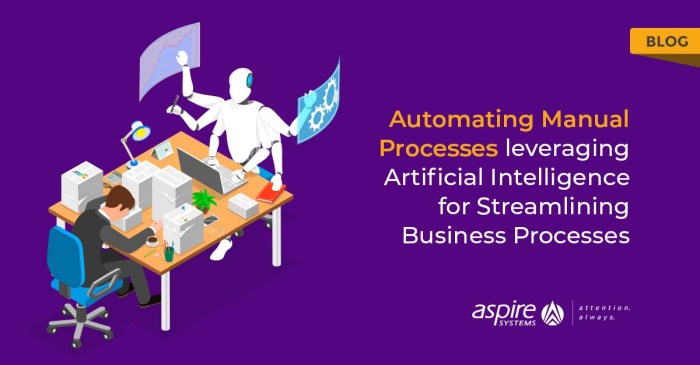
The role of AI in streamlining business processes is pivotal in today’s dynamic market landscape. From optimizing operations to revolutionizing decision-making, AI’s impact is profound and far-reaching. Let’s delve into how AI is reshaping the way businesses operate and compete in the digital age.
AI’s ability to automate tasks, manage workflows, and drive data-driven insights is transforming traditional business paradigms, offering unprecedented opportunities for growth and efficiency.
Importance of AI in business processes: The Role Of AI In Streamlining Business Processes

AI plays a crucial role in optimizing and streamlining business processes by automating repetitive tasks, analyzing large amounts of data quickly, and providing valuable insights for decision-making. This technology enables businesses to operate more efficiently, reduce costs, and stay competitive in today’s fast-paced market.
AI Applications in Various Industries
- AI-powered chatbots in customer service: Companies use AI chatbots to provide instant responses to customer inquiries, resolve issues, and improve overall customer satisfaction.
- Predictive analytics in healthcare: AI algorithms analyze patient data to predict potential health risks, recommend personalized treatments, and improve patient outcomes.
- Supply chain optimization in logistics: AI helps optimize supply chain operations by predicting demand, managing inventory levels, and identifying areas for cost savings.
- Fraud detection in finance: AI algorithms detect patterns of fraudulent activities, identify suspicious transactions, and prevent financial losses for businesses.
Enhancing Decision-Making and Efficiency
AI enhances decision-making in businesses by providing real-time insights, identifying trends, and predicting outcomes based on data analysis. By automating routine tasks, AI allows employees to focus on more strategic activities, increasing overall efficiency and productivity within organizations.
AI tools for process automation
AI tools have revolutionized the way businesses operate by automating various processes, leading to increased efficiency and productivity. Let’s explore some popular AI tools used for automating business processes and the benefits they offer.
List of popular AI tools for automation
- UiPath: A leading robotic process automation (RPA) tool that helps in automating repetitive tasks.
- Blue Prism: Another RPA tool that enables businesses to automate routine back-office processes.
- Automation Anywhere: An AI-powered automation platform that offers a variety of automation solutions.
- IBM Watson: Known for its cognitive computing capabilities, IBM Watson helps in automating complex tasks.
- Microsoft Power Automate: A tool that allows businesses to automate workflows across various apps and services.
Benefits of using AI tools for automation
- Improved efficiency: AI tools can perform tasks faster and more accurately than humans, leading to increased efficiency.
- Cost savings: By automating repetitive tasks, businesses can reduce labor costs and allocate resources more effectively.
- Error reduction: AI tools can minimize errors and inconsistencies in processes, leading to improved data quality.
- Enhanced scalability: Automation allows businesses to scale their operations without the need for additional human resources.
How AI tools reduce manual tasks and improve productivity, The role of AI in streamlining business processes
- Task automation: AI tools can automate repetitive and time-consuming tasks, freeing up employees to focus on more strategic activities.
- Workflow optimization: By streamlining workflows and eliminating bottlenecks, AI tools can improve productivity and reduce turnaround times.
- Predictive analytics: AI tools can analyze data to predict future trends and optimize processes, leading to better decision-making and improved outcomes.
Impact of AI on workflow management

AI has revolutionized workflow management within organizations by automating repetitive tasks, enhancing decision-making processes, and optimizing resource allocation. This technology has the potential to significantly streamline operations and improve overall efficiency.
Streamlining Workflow Processes
AI-powered workflow management systems can analyze and optimize processes to identify bottlenecks, eliminate redundant steps, and improve overall efficiency. For example, AI algorithms can automatically route tasks to the most appropriate team member based on skill set and availability, ensuring faster completion times.
- AI chatbots can facilitate communication within teams, providing real-time updates and notifications to ensure seamless collaboration.
- Machine learning algorithms can predict potential workflow issues before they occur, allowing for proactive problem-solving and preventing delays.
AI Technologies Transforming Workflow Management
Several AI technologies have transformed workflow management by enabling organizations to automate manual tasks, improve accuracy, and increase productivity. For instance, robotic process automation (RPA) tools can automate repetitive tasks such as data entry, freeing up employees to focus on more strategic activities.
AI technologies like natural language processing (NLP) can analyze unstructured data from emails, documents, and customer interactions to extract valuable insights and optimize workflow processes.
Optimizing Resource Allocation and Task Prioritization
AI plays a crucial role in optimizing resource allocation by analyzing data patterns and predicting future demands. By leveraging AI algorithms, organizations can allocate resources more effectively, ensuring that tasks are completed on time and within budget constraints.
- AI-driven scheduling tools can prioritize tasks based on deadlines, dependencies, and resource availability, maximizing productivity and minimizing delays.
- Machine learning algorithms can dynamically adjust resource allocations in real-time based on changing project requirements, ensuring optimal utilization of resources.
AI-driven data analytics for process improvement
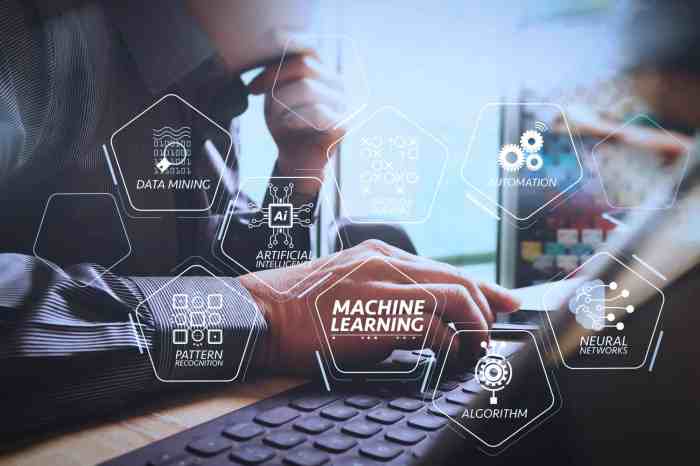
AI-driven data analytics play a crucial role in identifying areas for process improvement within businesses. By leveraging AI technologies to analyze vast amounts of data, organizations can gain valuable insights that help streamline their operations and enhance overall efficiency.
Enhancing Business Process Efficiency
- AI-driven analytics can track and analyze key performance indicators (KPIs) in real-time, allowing businesses to identify bottlenecks or inefficiencies in their processes promptly.
- Through predictive analytics, AI can forecast future trends and potential issues, enabling organizations to proactively address challenges before they impact operations.
- By utilizing machine learning algorithms, AI can optimize workflows and automate repetitive tasks, freeing up employees to focus on more strategic initiatives.
Importance of Real-Time Data Insights
Real-time data insights provided by AI-driven analytics are essential for optimizing business processes. By continuously monitoring and analyzing data as it flows through the organization, businesses can make informed decisions quickly and adapt to changing market conditions efficiently.
Wrap-Up
In conclusion, the integration of AI in streamlining business processes is a game-changer that promises to redefine how organizations operate and thrive in an increasingly competitive environment. By leveraging AI tools for automation, workflow management, and data analytics, businesses can unlock new levels of productivity and innovation, setting the stage for future success.
Outsourcing certain business functions can bring various benefits to companies, such as cost savings, access to specialized skills, and increased efficiency. By delegating tasks to external providers, businesses can focus on their core competencies and strategic goals. To learn more about the benefits of outsourcing, you can read the full article here.
Social media has a significant impact on business growth, providing opportunities for brand awareness, customer engagement, and market research. Companies that effectively utilize social media platforms can enhance their online presence and reach a wider audience. To delve deeper into the impact of social media on business growth, check out the full article here.
Data analytics plays a crucial role in strategic decision-making for businesses, enabling them to analyze trends, predict outcomes, and optimize performance. By harnessing the power of data, companies can make informed decisions that drive growth and innovation. To explore more about utilizing data analytics for strategic decision-making, you can read the full article here.
