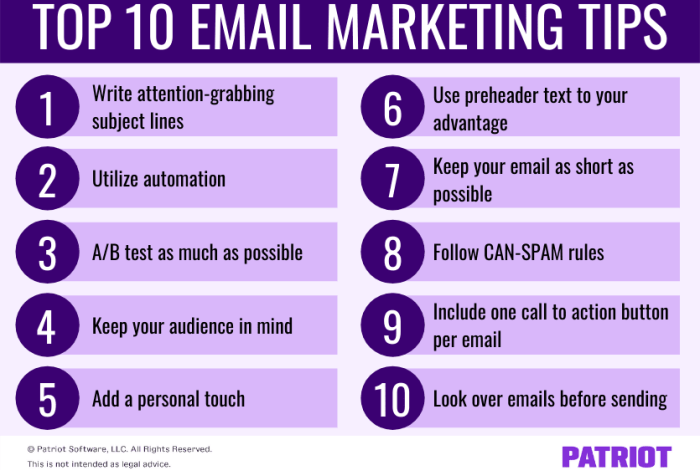
Kicking off with Tips for effective email marketing campaigns, this opening paragraph is designed to captivate and engage the readers, setting the tone research style that unfolds with each word.
Effective email marketing campaigns are crucial for businesses looking to reach their target audience and drive engagement. From crafting compelling subject lines to optimizing call-to-action buttons, every aspect plays a vital role in the success of these campaigns. Let’s delve into the key strategies that can elevate your email marketing game.






Importance of Email Marketing Campaigns: Tips For Effective Email Marketing Campaigns
Email marketing campaigns play a crucial role in the success of businesses in today’s digital world. They offer a direct and effective way to communicate with customers, build relationships, and drive sales. Let’s dive into the significance of email marketing campaigns and the benefits they bring to businesses.
Benefits of Running Effective Email Marketing Campaigns
- Increased Brand Awareness: Email campaigns help businesses stay top of mind with their audience by regularly sending valuable content and promotions.
- Targeted Marketing: With email marketing, businesses can segment their audience and send personalized messages based on demographics, behavior, or interests, resulting in higher engagement rates.
- Cost-Effective: Compared to traditional marketing methods, email campaigns are a cost-effective way to reach a large audience quickly and efficiently.
- Measurable Results: Email marketing platforms provide detailed analytics that allow businesses to track open rates, click-through rates, conversions, and other key metrics to measure the success of their campaigns.
Examples of Successful Email Marketing Campaigns, Tips for effective email marketing campaigns
1. Airbnb’s personalized email campaigns: Airbnb sends personalized recommendations and travel deals based on the user’s previous searches and bookings, leading to increased customer loyalty and engagement.
2. Spotify’s targeted email campaigns: Spotify uses data on user listening habits to send personalized playlists and concert recommendations, keeping users engaged and driving subscriptions.
3. Sephora’s exclusive offers: Sephora sends exclusive promotions and early access to new products to its email subscribers, driving sales and creating a sense of exclusivity among customers.
Target Audience Segmentation
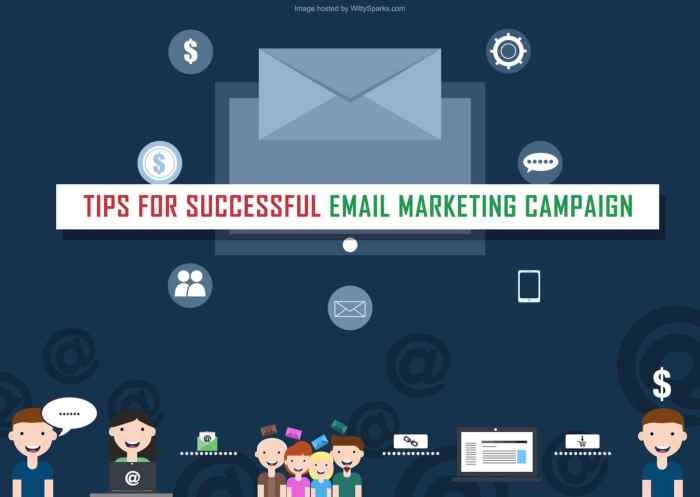
Segmenting the target audience is a crucial aspect of email marketing campaigns as it allows marketers to tailor their messages to specific groups of recipients, increasing the relevance and effectiveness of their communication.
Effective strategies for segmenting the target audience include:
Demographic Segmentation
- Dividing the audience based on age, gender, income, occupation, education level, etc.
- Creating personalized content that resonates with each demographic group.
- Using data analytics tools to gather information and insights for better segmentation.
Behavioral Segmentation
- Segmenting based on customer behavior such as past purchases, website interactions, email engagement, etc.
- Sending targeted emails with product recommendations or special offers based on customer behavior.
- Utilizing automation to trigger emails based on specific actions taken by recipients.
Psychographic Segmentation
- Segmenting based on interests, values, lifestyle choices, personality traits, etc.
- Crafting content that aligns with the psychographic profiles of different audience segments.
- Engaging with customers on a more emotional level by understanding their motivations and preferences.
Personalized content plays a significant role in improving engagement with segmented audiences as it makes the recipients feel valued and understood. By delivering tailored messages that resonate with the specific characteristics and preferences of each segment, marketers can significantly increase open rates, click-through rates, and conversions in their email campaigns.
Crafting Compelling Subject Lines
Crafting compelling subject lines is crucial in email marketing as it is the first thing recipients see and often determines whether they will open the email or not. A catchy subject line can grab attention, increase open rates, and ultimately lead to higher engagement with your email campaigns.
Importance of Catchy Subject Lines
- Subject lines are like the gatekeepers of your email – they need to entice recipients to open the email and read the content inside.
- A well-crafted subject line can create a sense of urgency, curiosity, or offer a benefit that compels the recipient to click.
- Personalized subject lines that address the recipient by name or mention previous interactions can also increase open rates.
Tips for Crafting Subject Lines
- Keep it concise: Aim for subject lines that are around 6-8 words long to ensure they are easily scannable.
- Use action-oriented language: Encourage recipients to take action by using verbs like “Discover,” “Join,” or “Shop.”
- Create a sense of urgency: Include phrases like “Limited Time Offer” or “Ending Soon” to motivate recipients to open the email promptly.
- A/B test your subject lines: Experiment with different subject lines to see which ones resonate best with your audience and drive higher open rates.
Examples of Effective Subject Lines
-
“Don’t Miss Out: 50% Off Sale Ends Tonight!”
-
“Unlock Exclusive Access: Your Invitation Awaits”
-
“Last Chance: Register Now for our Webinar Tomorrow”
Email Content Creation

Creating engaging content is crucial for the success of email marketing campaigns. Here are some best practices to follow when crafting email content to keep your audience engaged:
Tips for Creating Engaging Email Content
- Personalization: Address recipients by their names and tailor the content based on their preferences and behaviors.
- Clear Call-to-Action: Include a clear and compelling call-to-action that prompts recipients to take the desired action.
- Visual Appeal: Use eye-catching graphics, images, and videos to make the content visually appealing and engaging.
- Concise and Relevant: Keep the content concise, relevant, and focused on providing value to the recipients.
- A/B Testing: Experiment with different content formats, subject lines, and visuals to see what resonates best with your audience.
Effective Email Structure for Audience Engagement
- Eye-Catching Subject Line: Start with a compelling subject line that grabs the recipient’s attention and entices them to open the email.
- Introduction: Begin with a strong and engaging introduction that sets the tone for the rest of the email.
- Main Message: Deliver the main message clearly and concisely, focusing on the value proposition for the recipient.
- CTA Placement: Position the call-to-action strategically within the email, making it easy for recipients to act upon.
- Mobile Optimization: Ensure that the email content is mobile-responsive for seamless viewing on different devices.
Examples of High-Performing Email Content
- An email campaign by XYZ Company that used personalized recommendations based on previous purchases, resulting in a 30% increase in click-through rates.
- A promotional email from ABC Brand that featured interactive elements like quizzes and polls, leading to a 25% higher engagement rate.
- A newsletter by DEF Corporation that included visually appealing infographics and storytelling content, resulting in a 20% boost in open rates.
Call-to-Action Optimization
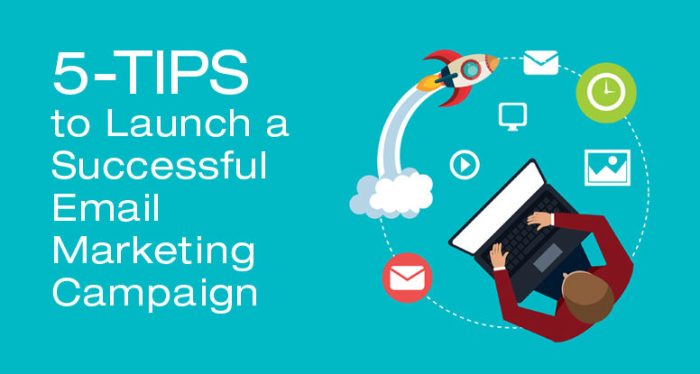
When it comes to email marketing campaigns, optimizing the call-to-action (CTA) buttons is crucial for driving conversions. A well-crafted CTA can significantly impact the success of your email campaign by guiding recipients towards taking the desired action, whether it’s making a purchase, signing up for a webinar, or downloading a resource.
Significance of Optimizing CTAs
Optimizing CTAs in your email campaigns can help improve click-through rates and ultimately drive more conversions. A compelling CTA grabs the recipient’s attention, clearly communicates the action you want them to take, and motivates them to act. By optimizing your CTAs, you can create a sense of urgency, build trust with your audience, and increase engagement with your emails.
Tips for Creating Compelling CTAs
- Use actionable language: Start your CTA with a strong action verb that clearly indicates what you want the recipient to do, such as “Shop Now,” “Download Your Guide,” or “Register Today.”
- Create a sense of urgency: Encourage immediate action by incorporating words like “Limited Time Offer,” “Act Now,” or “Don’t Miss Out” to convey urgency and drive conversions.
- Make it visually appealing: Use contrasting colors, bold fonts, and strategically placed buttons to make your CTA stand out and draw the recipient’s eye towards it.
- Keep it concise: Keep your CTA short and to the point, focusing on a single clear action to avoid confusion and make it easy for recipients to understand.
- A/B test your CTAs: Experiment with different wording, colors, and placement of CTAs to see which ones resonate best with your audience and drive the highest click-through rates.
Examples of Successful CTAs
Some successful examples of CTAs in email marketing campaigns include:
| Example 1: “Get 50% off your first purchase – Shop Now!” |
| Example 2: “Download Your Free E-book Today – Start Reading!” |
| Example 3: “Register for Our Exclusive Webinar – Reserve Your Spot!” |
Outcome Summary
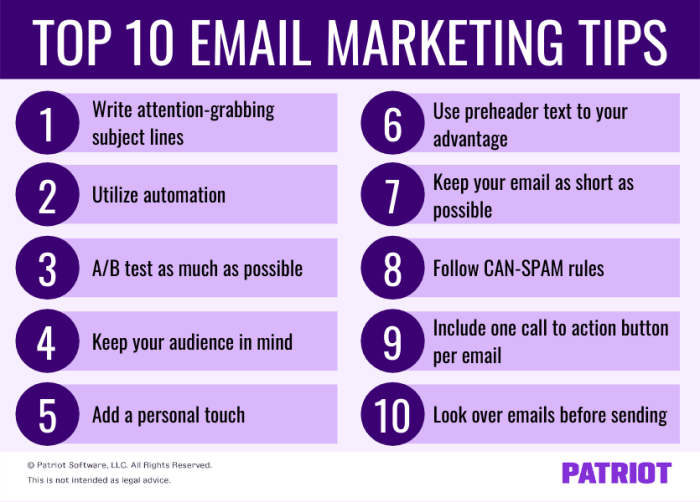
In conclusion, mastering the art of email marketing campaigns is a powerful tool for businesses to connect with their audience and drive conversions. By implementing the tips discussed, businesses can enhance their email marketing efforts and achieve greater success in their campaigns. Stay tuned for more insights and updates in the world of digital marketing.
Effective marketing techniques play a crucial role in the success of online businesses. From search engine optimization to social media marketing, businesses need to stay updated with the latest trends and strategies to reach their target audience effectively. For more information on this topic, you can visit Effective marketing techniques for online businesses.
Before starting a new business, entrepreneurs must be aware of the legal requirements involved. This includes registering the business, obtaining the necessary permits, and complying with tax regulations. Understanding these legal obligations is essential to avoid any potential legal issues in the future.
To learn more about this topic, you can visit Legal requirements for starting a new business.
Incorporating social responsibility into business practices is not only a moral obligation but also a strategic move for companies. By engaging in sustainable business practices and giving back to the community, businesses can enhance their brand image and attract socially conscious consumers.
To explore this topic further, you can visit Incorporating social responsibility into business practices.
